Truss or Rafter Frame: Two Ways to Organise a Roof
Compare a truss or rafter frame by tracing its joints and repeated members, then describe the roof’s visible arrangement with clearer, more useful terms.
The common mistake when comparing a truss or rafter frame is to count sloping timbers and stop there. That can leave you with a vague description instead of the useful distinction: a truss is assembled as a connected frame, while a rafter roof repeats its sloping members along the building.
Trace the frame
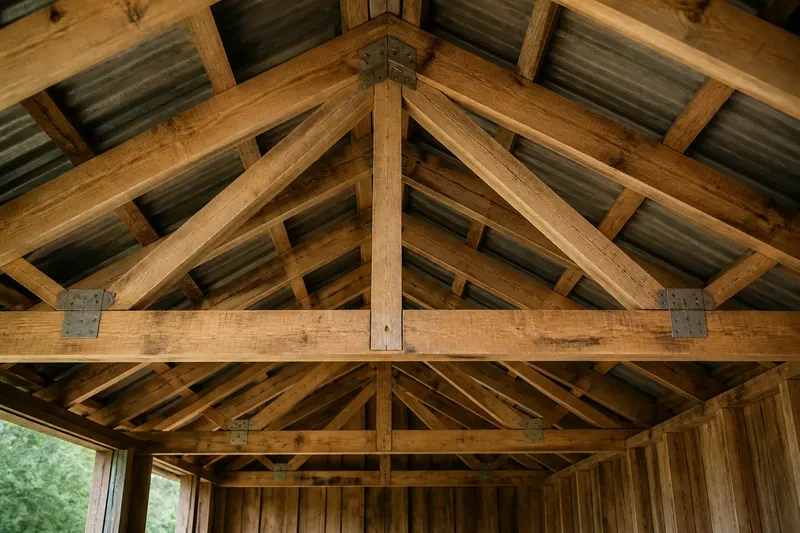
Begin at the joints. In a typical truss, two sloping top chords meet a lower chord, and internal webs connect parts of that outline. Together they make a recognisable frame, often divided into smaller triangles.
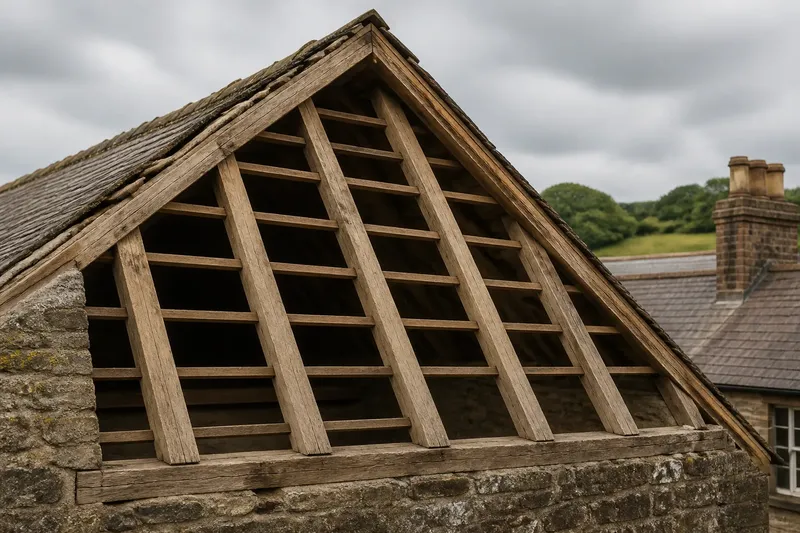
A rafter arrangement is organised differently. Individual rafters run from the ridge area towards the eaves, repeating along the building. They may be paired across the roof and linked by ties, but each pair does not necessarily form a complete webbed frame.
These names describe arrangements, not a ranking. The roof’s design, supports and condition determine how its members work; the label alone does not say whether a particular structure is suitable or sound.
Recognise truss parts
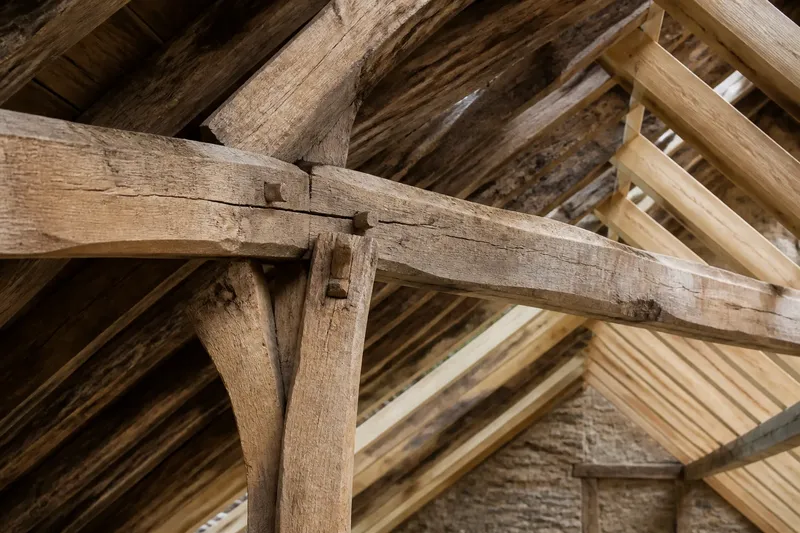
The outer members of a familiar triangular truss are its top chords and bottom chord. Webs sit inside that outline and connect the chords. A central vertical web may be called a king post, while angled webs are often described as struts. Terminology varies, so connections matter more than a piece’s name.
Read the outline first, then follow each web to its joints. A horizontal timber on its own is not enough to identify a truss: it may instead be a tie connecting a pair of rafters. Look for the complete grouping of members before choosing a description.
Recognise rafter parts
Rafters are the repeated sloping members. They meet at or near the ridge and extend towards the eaves, with support from the roof’s bearings and any intermediate members. A ridge board can align their upper ends; a ridge beam, by contrast, forms a structural support in the arrangement.
Horizontal members can also appear between opposing rafters. A ceiling joist or tie is usually lower in the roof space; a collar tie links rafters higher up, nearer the ridge. These members may be important to the framing, but they do not turn a pair of rafters into a truss unless the rest of the connected frame supports that reading.
Compare the roof rhythm
Trusses are often visible as separate frames repeated along the building, with other members running across them. Rafters usually appear as a sequence of individual slopes, with boards or battens crossing over them. Purlins and braces can occur in either kind of roof, so one diagonal member is not a verdict.
Also note what the framing does to the roof-space interior. A truss’s webs divide the space within its outline. A rafter arrangement may leave the space between opposing slopes more open, though supports, partitions and later work can change what is visible.
Say you are looking into an invented small shed roof. You can see paired sloping chords, a lower horizontal chord and two webs, each visibly joined to the others; describing that group as a truss is more precise than calling it a set of rafters. In another invented shed, you see repeated slopes meeting at the ridge, with a high tie between some pairs but no webbed frame: “rafter roof with collar ties” better records the visible arrangement.
Questions about roof framing?
Does every truss have a bottom chord?
Many familiar roof trusses include a bottom chord, but forms vary. Describe the connected members you can trace rather than rejecting a truss identification because one expected part is absent from view.
Is a ridge board the same as a ridge beam?
No: a ridge board aligns opposing rafter ends, while a ridge beam acts as a structural support. Their appearance from below may not settle which one is present, so note the framing you can see and seek professional advice if the distinction affects work.
Can a rafter roof have diagonal braces?
Yes. Braces and purlins can support rafters without creating a truss. Describe the principal members and their joints, rather than classifying the whole roof by one diagonal.
Can one roof use both arrangements?
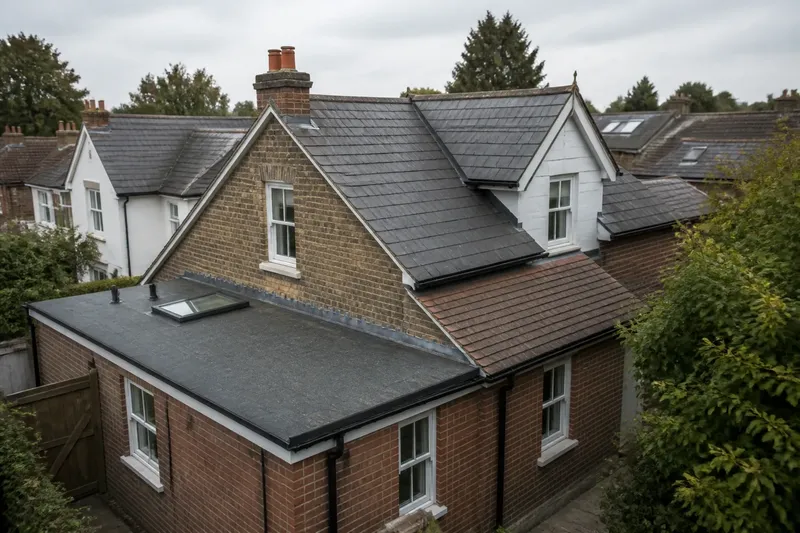
Yes. An extension, dormer or change in roof level may use a different framing arrangement from the adjoining section. Describe each part separately before applying one label to the whole roof.
Record visible evidence
A short observation can be more useful than a broad label. Note whether you see repeated rafters or distinct frames, whether the members form a webbed group, and where ties or supports appear. If a joint is hidden, say so rather than filling in the missing detail.
- Observation: paired sloping members and a joined lower chord are visible. If webs also connect them into a frame, describe a truss; if not, record the visible members without naming a truss.
- Observation: many slopes repeat towards the ridge, with no webbed units in view. If the view is clear, describe a rafter arrangement; if joints are concealed, note that identification is uncertain.
- Observation: a horizontal member links opposing rafters near the ceiling. If it sits low, describe it as a ceiling joist or low tie where appropriate; if its role is unclear, record its position without assigning a structural function.
- Observation: a horizontal member links rafters near the ridge. If it joins opposing rafters, describe its visible position as a collar tie; if the connection is hidden, avoid claiming more than the view supports.
- Observation: diagonal timber meets rafters or a purlin. If it braces a repeated rafter arrangement, describe it as a brace; if it forms part of a connected webbed frame, record that grouping instead.
- Observation: a roof section changes around a dormer or extension. If the framing pattern changes too, describe the sections separately; if it does not, retain one description and note the visible alteration.
Keep access safe. Observe from the floor or a proper viewing point; do not climb onto framing or remove fixed coverings. If you are planning alterations or concerned about the structure’s condition, ask a qualified building professional to inspect it in person.
For a concise description of a truss or rafter frame, name the members and the way they connect: for example, “repeated rafters with a high collar tie” or “triangular trusses with internal webs”. Those words make the roof’s visible organisation clear without claiming to know what a concealed joint contains.